
A Personal Reckoning With Inherited Hatred
There is a particular kind of poison that requires no injection; it is simply absorbed through the air of one’s upbringing. For generations of Nigerians from the South-East, antipathy toward the North was not a conclusion arrived at through personal experience. It was an inheritance. A default setting installed in childhood, reinforced by community, and never seriously interrogated because the architecture of Nigerian politics depended on its perpetuation.
Many of us never shared a meal with a Northerner, never sat in a Northern home, never looked into Northern eyes long enough to find the shared humanity that tribalist politicians had spent decades convincing us was not there. We operated on second-hand narratives; stories passed down through generations, calcified by the trauma of civil war, hardened by decades of political manipulation into something that felt like truth but was, in reality, a cage. A cage that kept us divided, manageable, and permanently available for exploitation by those who understood that a Nigeria at war with itself is a Nigeria that never asks the right questions of its rulers.
This was the political inheritance of every Nigerian alive today. And every politician before a certain moment in history not only accepted this inheritance; they actively cultivated it, monetised it, and rode its poisonous currents into the highest offices in the land.
The Man Who Chose a Different Road
Then came Peter Obi.
What distinguishes Peter Obi from every political figure of his generation is not merely his policy competence or his documented frugality in office; remarkable as those qualities are in Nigeria’s political landscape. What distinguishes him is a decision, made at considerable political cost, to treat the healing of Nigeria’s ethnic wound not as a campaign slogan but as a personal moral obligation.
While other presidential aspirants were triangulating their ethnic appeals and calculating which divisions to exploit for maximum electoral yield, Peter Obi did something that the political establishment could only interpret as either naivety or provocation: he went North. Not for photo opportunities. Not for carefully staged rallies designed for Southern consumption. He went North and stayed. He spent months traversing Northern states, sitting with the displaced in IDP camps, commissioning boreholes in communities where clean water was a luxury, donating to institutions that the Nigerian state had long abandoned, and breaking the Ramadan fast shoulder-to-shoulder with Muslim communities who had been told, in a thousand subtle and unsubtle ways, that an Igbo man’s fellowship was not to be trusted.
He did not do this as a transaction. He did it as a declaration; a declaration that the bridge between the South-East and the North was not merely desirable but necessary, and that someone had to have the courage to begin walking across it regardless of the political consequences.
He went further still. He laid out a comprehensive developmental vision that dared to imagine the North not as a burden on Nigeria’s progress, but as its engine; the food basket of the nation and, by extension, the continent. A North unlocked from the chains of deliberate underdevelopment and political manipulation, transformed by investment and intentional governance into the agricultural and economic powerhouse that its land and its people have always had the capacity to become.
Why the Political Class Called It Treason
To the architects of Nigeria’s status quo, what Peter Obi was doing was not bridge-building. It was sabotage.
The entire machinery of Nigerian elite politics is calibrated around one foundational requirement: that the citizenry remain divided. A prosperous North is a politically conscious North. A North that breaks bread with the South-East is a North that begins to ask why both regions have been simultaneously exploited by the same Abuja-Lagos political class that professes to speak for each against the other. A Nigeria healing its ethnic wounds is a Nigeria developing the collective political will to demand accountability from those who have fed off its brokenness for decades.
This is why cross-ethnic fellowship between an Igbo statesman and Northern communities was treated as something close to taboo in Nigeria’s political culture. This is why the politics of stomach infrastructure; the deliberate maintenance of poverty as a tool of electoral control; requires tribal division as its oxygen. You cannot hand a man a bag of rice at election time and tell him it is his survival if that man has already built genuine relationships across ethnic lines and begun to understand that his poverty is manufactured, not inevitable.
Peter Obi’s Northern outreach was, in this sense, a direct assault on the business model of Nigerian electoral politics. And the political establishment responded with the instinctive hostility of those who understood exactly what was at stake.
The Historic Weight of an Obi-Kwankwaso Victory in 2027
An Obi-Kwankwaso administration taking the oath of office in Aso Rock in 2027 would not simply represent a change of government. It would represent something far more profound; a rupture in the historical logic that has governed Nigerian political life since independence and, most painfully, since the catastrophic fratricidal trauma of the civil war.
For the first time in the post-civil war history of this nation, the South-East; a region that has carried the unspoken burden of being treated as a conquered people within the borders of a country its sons and daughters helped build; would have a seat at the absolute centre of national power. Not as a junior partner. Not as a demographic to be appeased at the margins of power. But as a co-architect of Nigeria’s national destiny.
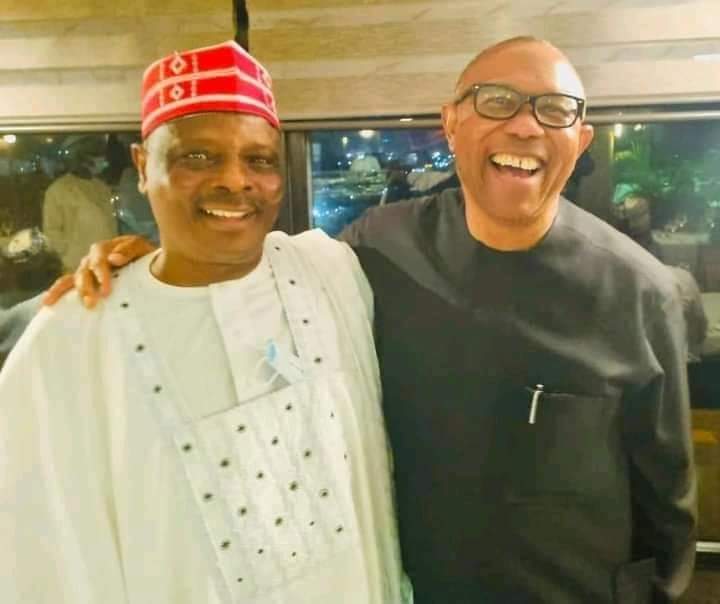
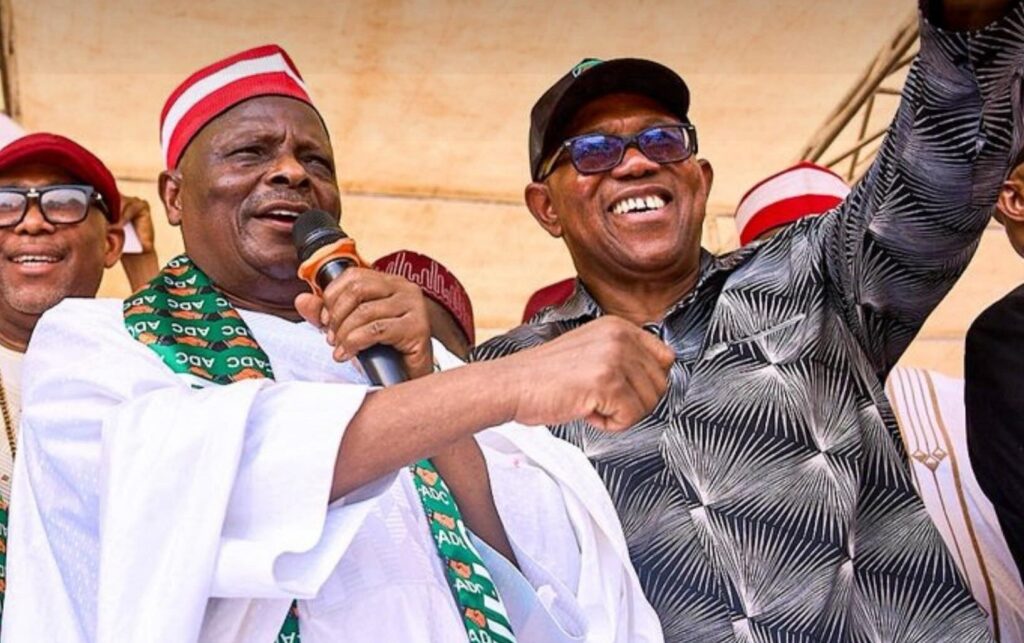
The psychological significance of this cannot be overstated and must not be dismissed as sentiment. Nations heal through symbolic moments as much as through policy. The image of a Peter Obi and Rabiu Kwankwaso; an Igbo Catholic and a Kano Muslim, two men whose communities have been told for generations that their relationship must be one of suspicion and competition; governing Nigeria together from Aso Rock would send a signal to every Nigerian citizen, in every village and every city, that the story their politicians had been telling them about each other was a lie.
It would shatter, in a single political moment, archetypes of division that have been decades in construction. It would announce, to a generation of young Nigerians who have known nothing but ethnic manipulation and manufactured scarcity, that a different Nigeria is not a utopian fantasy but an achievable political reality.
The Governance Vision: Prosperity as the Language of National Unity
Beyond the symbolism; and the symbolism alone would be historic; an Obi-Kwankwaso administration brings to the table a complementary governance philosophy that addresses Nigeria’s development crisis from both its Northern and Southern dimensions simultaneously.
Peter Obi’s documented record of fiscal discipline, infrastructure investment, and human capital development in Anambra State represents a governance template that Nigeria’s long-suffering citizenry has been denied at the federal level. Rabiu Kwankwaso’s transformative legacy in Kano; particularly his revolutionary investment in education that produced an entire generation of Kano scholars who bear his name not out of political loyalty but out of genuine gratitude; represents the Northern developmental vision that Abuja has consistently suppressed because an educated, prosperous North is an ungovernable electoral constituency for the current political order.
Together, these two men do not merely represent good governance. They represent the geographic and demographic breadth of Nigerian possibility; the proof that competent, people-centred leadership exists in this country in sufficient abundance to transform it, if only the political machinery of division and capture can be dismantled long enough for that leadership to reach the levers of state power.
A Nation’s Appointment With Itself
Nigeria has been postponing a reckoning with its own soul for the better part of six decades. The reckoning that asks: What are we, really, beneath the tribal arithmetic and the petroleum patronage and the manufactured emergencies that keep us permanently distracted from the question of what this country could become?
The Obi-Kwankwaso ticket in 2027 is not merely a political coalition. It is Nigeria’s most credible opportunity, in the lifetime of anyone reading these words, to stop postponing that reckoning and begin the long, difficult, necessary work of national healing.
It is an opportunity for the South-East to step out of the shadows of marginalization and into the full light of national belonging. It is an opportunity for the North to be governed by someone who has already demonstrated, through personal sacrifice and deliberate fellowship, that he sees Northern prosperity not as a threat to Southern advancement but as its necessary complement. It is an opportunity for every Nigerian who has inherited the poison of tribal hatred to discover, as many already have through the Obidient Movement’s remarkable cross-ethnic coalitions, that what we share is infinitely greater than what divides us.
Peter Obi began walking across the bridge years before anyone gave him a realistic chance of reaching the other side. He walked it through IDP camps and Ramadan iftars and agricultural blueprints and the quiet, consistent testimony of a man who genuinely believes that Nigerians; all Nigerians; deserve better than what they have been given.
The question before Nigeria in 2027 is simply this: will enough of us be willing to walk across that bridge with him?
Because on the other side of that bridge is not just a different government. It is a different Nigeria; healed, whole, and finally, for the first time in a generation, beginning to fulfill the extraordinary promise of its extraordinary people.