
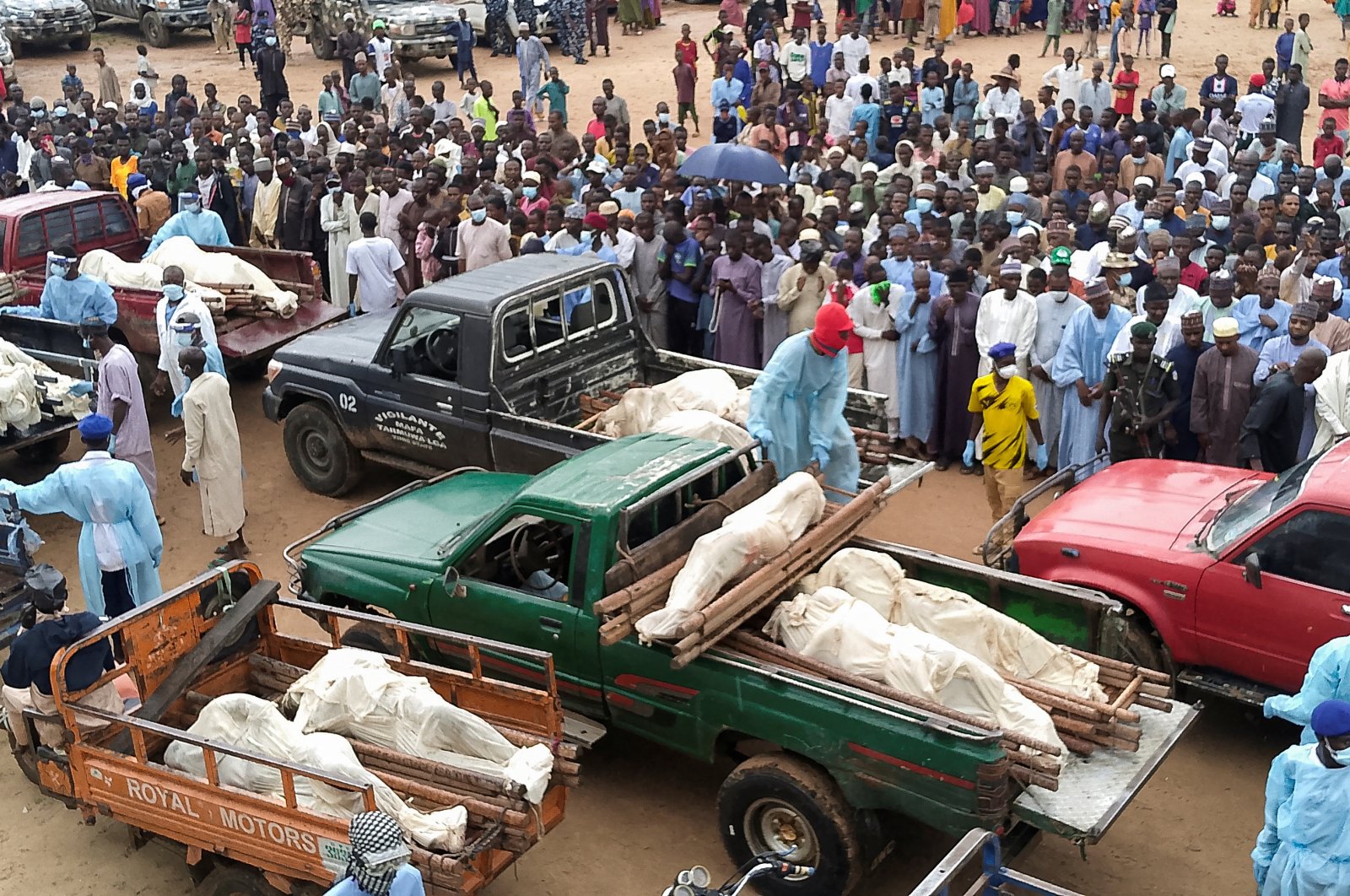
There is a question that more 250 million Nigerians deserve to have answered, loudly, publicly, and with the full weight of documented evidence and it is this:
“Does the APC administration of President Bola Ahmed Tinubu actually want to protect Nigerian lives? Or has it, through deliberate policy choices, strategic appointments, rhetorical capitulation, and institutional betrayal, functionally aligned itself with the forces that are destroying Nigerian lives?”
The evidence accumulated over the past two years does not suggest negligence. Negligence can be reformed. Negligence does not have a pattern. What exists in Nigeria today has a pattern, and that pattern points, with uncomfortable clarity, toward something more systemic, more deliberate, and more morally catastrophic than mere incompetence.
The Nigerian state, under Tinubu’s watch, is doing three things simultaneously to its own people: bombing them from the air, leaving them undefended before jihadist murderers, and then planning to arm and uniform those same jihadists and embed them back into the military.
And when the international community asks questions, Abuja issues condolence statements and holds press conferences.
This is not governance. This is performance art over an open grave.
Let us begin with the most stunning and underreported fact of APC Nigeria’s security crisis since 2015: the Nigerian Air Force has repeatedly, systematically, and with near total impunity bombed and killed Nigerian civilians.
Not once. Not twice. Not as a rare tragic accident. As a recurring, documented, institutionally shielded pattern of mass killing that has cost the lives of well over a thousand innocent Nigerians.
On March 16, 2014, a misfired airstrike targeting terrorists in Kayamla village in Borno State led to the deaths of at least 10 civilians, the opening chapter of what would become a long, bloody catalogue of military inflicted civilian massacres.
On January 17, 2017, in Rann, Borno State, over 100 people were killed when a fighter jet bombed a camp for internally displaced persons and Red Cross aid workers distributing food. Read that again: a displacement camp. People who had already been driven from their homes by Boko Haram, obliterated by the Nigerian Air Force. The public panel report on the incident set up by the Nigerian Defence Headquarters cited “a lack of appropriate marking of the area” as the cause. The sovereign state of Nigeria bombed a refugee camp and then explained it was poorly marked.
In December 2017, at least 35 people were killed and about 3,000 homes destroyed when communities of Shafaron and Nvi in Adamawa State were struck in error during a Nigerian Air Force operation.
In February 2018, Daglun community in Borno State was hit by yet another mistaken airstrike, killing 20 civilians.
In April 2019, at least six children were killed and 17 others injured when air raids targeting bandits accidentally struck the villages of Tangaram and Ajia in Zamfara State.
In June 2021, a mistaken jet bombardment in Niger State hit wedding guests and other civilians.
In September 2021, Buhari village in Yobe State was struck by an erroneous airstrike leaving roughly a dozen civilians dead. Later that same month, at least 20 fishermen were killed at Kwatar Daban Masara near Lake Chad when a military aircraft struck their village while targeting terrorist camps.
In December 2022, an airstrike in Mutumji, Zamfara State, killed 64 civilians during an operation targeting armed groups.
In December 2023, at least 85 civilians were killed and many others seriously injured in Tudun Biri village in Kaduna State when a Nigerian Army drone struck a gathering of villagers celebrating the birthday of the Prophet Muhammad. The military’s own statement described it as an inadvertent strike on “members of the community.”
According to an Associated Press tally, Nigerian Air Force airstrikes have killed at least 500 civilians since 2017 alone.
And then, in April 2026, barely two weeks ago, the Nigerian Air Force delivered its latest and possibly most monstrous strike. The market at Jilli, a small town on the Borno-Yobe border, was packed on a Saturday at peak trading hours when Nigerian Air Force jets screamed overhead. What followed left trading stalls reduced to ash with incinerated bodies in the rubble.
A United Nations conflict monitoring report confirmed the strikes killed at least 56 people, with local chief Lawan Zanna Nur reporting that combined dead and injured numbered around 200.
Amnesty International Nigeria director Isa Sanusi confirmed the toll directly: “We spoke with the hospital. We spoke with the person in charge of casualties and with the victims.”
In a breathtaking display of either incompetence or contempt for public intelligence, the military released photos purportedly showing targets “affiliated with” jihadists — with one photo literally labelled “market.” They bombed a market and then published a photo of the market they bombed as justification for bombing it.
Taken together, Punch newspaper has documented that over 425 people, including children and women, were killed by military accidental bombings between September 2017 and 2023 alone, before the 2023 Tudun Biri massacre, before the 2024 Silame strike, and before the April 2026 Jilli slaughter.
The total civilian death toll from Nigerian military airstrikes since 2015 runs well beyond one thousand souls.
Here is the comparison that every Nigerian president, every service chief, and every minister of defence should be made to sit and contemplate: the United States government has never bombed a shopping market in Atlanta.
The British Royal Air Force has never dropped ordnance on a village market in Yorkshire.
France has never incinerated civilians gathered for a festival in Provence.
Germany has not targeted a Bavarian wedding celebration with fighter jets. Not once. Not accidentally. Not ever.
This is not because these nations do not possess weapons or face internal threats. The United States fought a devastating civil war, combated the Irish Republican Army’s terror campaign across decades, and battles active domestic terrorism today.
Yet the idea of an American bomber pilot targeting a Texas farmers’ market, or a British jet striking a Norfolk church gathering, and then releasing a statement calling it a “precision operation” is so alien to democratic governance as to be literally unthinkable.
Why? Because in civilized nations, the military exists by an iron social covenant: it protects citizens, it does not bomb them.
When a US military strike kills civilians, it triggers congressional hearings, independent investigations with real prosecutorial power, chain-of-command accountability reviews, and the permanent career destruction of responsible officers.
When a British airstrike kills a civilian, it makes national headlines for months, the Ministry of Defence faces sustained parliamentary scrutiny, and independent judicial inquiries are convened with full subpoena power.
In Nigeria, officers who ordered airstrikes that killed hundreds of civilians receive no prosecutions, no meaningful disciplinary action, and in several documented cases, subsequent promotions.
Al Jazeera’s reporting confirmed that there has been “practically no admissions of guilt from military authorities or provision of support for survivors.” After an airstrike killed 10 people in Yobe in 2021, the army initially stated “no bomb or missile was even expended” and then admitted the strike within 24 hours, promising a “board of inquiry.”
Nothing has been heard of that inquiry since.
This impunity is not a bug in the system. It is the system.
If the military’s bombing of civilians represents the physical dimension of this government’s war against its own people, then the rhetoric emanating from Tinubu’s handpicked security establishment represents the ideological dimension.
And it is, frankly, more damning.
Let us be precise about what has been said publicly, by officials of the Nigerian government, about men who are beheading Christians, raping women, enslaving children, and burning villages to ash.
Nigeria’s Chief of Defence Staff, General Christopher Musa Oluyede personally appointed by President Tinubu has reportedly described the jihadists committing these atrocities as “prodigal sons.”
National Security Adviser Nuhu Ribadu, the man constitutionally responsible for securing Nigeria from existential threats, calls them “our brothers.”
Army Chief Taoreed Lagbaja Shaibu calls them “my sons.”
And then there is Sheikh Ahmad Gumi, the Kaduna cleric whose extraordinary access to the highest levels of government security architecture is itself a scandal requiring investigation, who has placed on record his moral alignment with perfect clarity: “I am more concerned about the attackers than the victims.”
Gumi has further confirmed that the Nigerian government knows the identity and location of every terrorist operating in the country. He goes with them to negotiate. He always has.
And the government allows it, welcomes it, and defers to it.
Let the meaning of this vocabulary sink in. “Prodigal sons.” “Our brothers.” “My sons.”
These are not terms of tactical calculation designed to facilitate surrender negotiations. They are terms of affection, kinship, and moral solidarity. When the NSA of the Federal Republic of Nigeria calls men who hack off heads “our brothers,” he is not describing a policy position. He is revealing a worldview.
To these men, and to the president who appointed them, the real crime of Boko Haram is not the beheading, the rape, the enslavement, the mass displacement of millions, the destruction of entire communities, the burning of churches, the abduction of schoolgirls.
The real crime, the one that actually produces discomfort in Aso Rock, is getting caught, generating damaging international media coverage, and creating pressure on a government whose primary interest appears to be the management of optics rather than the protection of lives. As long as the slaughter remains in Borno, as long as it stays in Plateau and Kaduna and the villages of the Middle Belt and the northeast, as long as it can be described in military press releases as “ongoing security operations,” the system is satisfied.
Open Doors estimated that 4,118 Christians were killed for their faith in Nigeria in 2024, the highest number of Christians martyred for their religion anywhere on earth in any country. Not in Syria. Not in Afghanistan. Not in the Democratic Republic of Congo. In Nigeria.
Under a sitting president whose NSA calls the perpetrators “our brothers.” This is the moral condition of Nigeria’s security leadership in April 2026.
No appointment in Tinubu’s security cabinet better symbolizes this government’s relationship with the forces of death than Bello Matawalle, the Minister of State for Defence, a man whose own track record as governor of Zamfara State has generated serious, documented, and allegations of direct complicity with the armed bandits and terror networks currently massacring Nigerians.
A significant portion of the international controversy surrounding Nigeria’s security governance centers on Matawalle, whose credibility is undermined by allegations dating back to his governorship of Zamfara State, including accusations of complicity with armed bandits and the facilitation of ransom payments.
An international security assessment report raised multiple “red flags” regarding Matawalle: allegations of complicity with bandits during his tenure as governor, claims from local testimonies of harboring bandit leaders, concerns over the facilitation of ransom payments, and a fundamental lack of relevant security experience that weakens professional military leadership.
This is the man Tinubu has placed in charge of a significant portion of Nigeria’s defence ministry apparatus. The man whose past is stained with credible allegations of collaboration with the very criminal networks now killing Nigerian civilians.
And the President has refused to remove him.
Florida State Representative Kimberly Daniels, Chairwoman of the United World Congress of Diplomats, called on Tinubu directly to “look inward” and remove elements compromising national security, with her specific, immediate recommendation being “the removal or redeployment of Minister Bello Matawalle to restore the integrity of the defence ministry.”
Daniels, whose intervention was prompted by direct pleas from Nigerians living in terror, described the devastating phenomenon of “homegrown terror,” stating: “The greatest form of terrorism a person can experience is terror that comes from homegrown familiar enemies. When the people you trust to protect you work undercover with those who want to harm you, it must be devastating.”
Daniels condemned the brutal killings of Christians on Palm Sunday and Easter Sunday in Plateau, Nasarawa, Kaduna, and other parts of Nigeria, noting that affected communities had expressed exhaustion with political statements from Tinubu’s administration and were demanding “real action, while the voice of innocent blood cries out from the ground.”
Daniels further noted that the assessment report specifically identified that “the attacks against believers in Northern Nigeria are allegedly protected by leadership from the inside,” and called on the United States government and international partners to increase diplomatic pressure to ensure accountability for those accused of aiding terrorism.
She also noted that House Resolution 761, which supports redesignating Nigeria as a Country of Particular Concern, received bipartisan support in the Florida House.
A foreign legislator is fighting harder for the lives of Nigerian citizens than the president of Nigeria.
Let that fact reverberate.
The moral obscenity of Tinubu’s security architecture reaches its most direct and personal expression in the contrast between how Nigeria’s frontline soldiers are treated and how Nigeria’s terrorists are received.
Nigerian soldiers fighting the Boko Haram insurgency in the northeast have lamented severe delays in the payment of their allowances.
Despite a Scarce Skills Allowance of N100,000 per month approved by the federal government, soldiers report receiving only N20,000 monthly, a fifth of what they are owed.
Attempts to raise complaints have been met with direct threats from army authorities. The soldiers, speaking anonymously out of fear of victimization, have accused service chiefs of outright corruption and extortion, and expressed fears that the lives of soldiers on the frontline were not being protected or valued.
The corruption in Nigeria’s military procurement is so severe that despite the country allocating $440 million to the Ministry of Defence in a single budget cycle, soldiers on the ground have faced Boko Haram armed only with AK-47s, while the terrorists’ arsenal includes rocket-propelled grenades, machine guns fitted with anti-aircraft visors, and heavy explosives.
A lieutenant colonel was placed under investigation not for battlefield failure but for criticizing military leadership on a WhatsApp group, calling his superiors “Nollywood actors” who had failed to supply his men with adequate weapons.
So the men doing the dying are cheated of their allowances, threatened when they complain, outgunned by the enemy they fight, and watched over by commanders who siphon their welfare packages.
Meanwhile, those who did the killing are processed through “deradicalisation” programs, handed cash and starter equipment, graduated in public ceremonies, and reintegrated into communities and, in the most scandalous development into the military itself.
The Defence Headquarters has confirmed that 800 former Boko Haram fighters are currently undergoing deradicalisation under Operation Safe Corridor, with the Chief of Defence Training and Operations declaring publicly that “one year is sufficient enough” to re-orient and reintegrate them into society.
The total number of surrendered Boko Haram members and their families now stands at a staggering 129,000.
In March and April 2025, batches of 600 and 390 “repentant Boko Haram members” publicly graduated, each receiving cash and startup equipment for a trade of their choice.
The results of this policy have been predictable to everyone except, apparently, those running it.
Soldiers operating alongside “repentant” Boko Haram members embedded with their units have reported that these individuals are leaking Nigerian Army movements and armory locations directly to active terrorists.
Thirteen “repentant” Boko Haram members who had been provided with sophisticated weapons and motorcycles by the Borno State Government, being prepared for integration into the Nigerian military escaped with all the weapons and returned to the bush.
Let us be direct about what this means in practice. Tinubu’s government is planning to arm men who have spent years executing beheadings, raping women, enslaving children, and burning churches.
It will give them Nigerian Army uniforms. It will hand them rifles. It will assign them to military formations alongside the soldiers they once tried to kill, soldiers who are already complaining that these individuals are passing intelligence to the terrorists. And then it will expect Nigerian civilians to feel secure.
Every legitimate, non-terrorist-sympathizer commanding officer who is killed on the front line leaves a vacuum that this government appears content to fill with compliant incompetents or, worse, with rehabilitated killers.
The message to Nigerian soldiers is unambiguous: your government pays terrorists graduation bonuses while delaying your allowances. Your government calls the men trying to kill you “prodigal sons” while calling investigations into your welfare threats to army discipline.
The human cost of this catastrophic governance is written in the most final currency available, the lives of Nigeria’s most dedicated military commanders.
In November 2025, Brigadier General Musa Uba, commander of the 25 Task Force Brigade in Damboa, Borno State, was ambushed along the Damboa–Biu axis. After surviving the initial assault, he was captured by ISWAP fighters and executed, a fact confirmed by President Tinubu himself, who expressed “deep sorrow.”
Then, barely five months later: Brigadier General Oseni Omoh Braimah, commander of the 29 Task Force Brigade, was killed on the night of April 9, 2026, when jihadists overran his base in Benisheikh, Borno State. He was the second top officer to be killed within five months as violence surged across the north.
When a Brigadier-General falls inside a fortified military base, the question is no longer whether Nigeria faces insecurity. It is whether the country can maintain any security at all.
When a man in command of a brigade can be killed inside his own headquarters, the illusion of safety has already eroded completely.
These were not statistics. These were fathers, husbands, leaders of men, commanders who chose to be at the front rather than safely removed from the fighting. General Braimah was described by military colleagues as a field focused officer who maintained close contact with troops under his command, part of a leadership culture within the Nigerian Army that prioritizes forward presence in active theatres to boost morale.
They died serving a government that calls the people who killed them “prodigal sons.”
Tinubu’s response to Braimah’s killing was a statement praising “the courage and heroism of the soldiers.”
Words.
The same administration whose NSA fraternizes rhetorically with jihadists praises the soldiers they murder, and then continues every policy that put those soldiers in mortal danger while arming their killers.
The world is watching, and it is drawing its own conclusions about Nigeria’s security leadership.
In December 2020, the Chief Prosecutor of the International Criminal Court concluded a preliminary examination into Nigeria, finding reasonable grounds to believe that both Boko Haram and Nigerian security forces had committed war crimes and crimes against humanity.
In September 2025, the UN Committee on the Elimination of Discrimination Against Women found Nigeria responsible for grave and systematic violations of women and girls’ rights, citing the government’s repeated failure to prevent attacks on schools or protect victims.
A US-led international security assessment found that local leaders and survivors report a total “disconnect between government rhetoric and the reality of safety on the ground,” with one account stating: “We hear statements from Abuja, but here, we bury our loved ones almost every week. There is no protection.”
And the United States’ own position on Nigeria has crystallized into a formal designation.
Nigeria holds the status of a Country of Particular Concern for religious freedom violations, a designation that carries serious diplomatic and potentially financial implications for a nation that presents itself as Africa’s largest democracy.
Nigeria is not being judged harshly by uninformed outsiders. Nigeria is being judged on its own documented record.
There is a test every government must eventually face, the test of whose side it is on when the guns are pointed at its own people.
The Tinubu administration has now failed that test, repeatedly and publicly, across every dimension available to measure it.
It has failed in the air, where Nigerian jets repeatedly bomb civilian markets, displacement camps, wedding gatherings, and fishing villages while zero responsible commanders face criminal prosecution.
It has failed in its security leadership, where the NSA calls jihadists “our brothers,” the Army Chief calls them “my sons,” and the Chief of Defence Staff, personally chosen by Tinubu, calls men who behead Christians “prodigal sons.”
It has failed its soldiers, who fight and die on inadequate pay, with withheld allowances, carrying inferior weapons against a better armed enemy, surrounded by commanders the frontline men themselves have accused of corruption and extortion.
It has failed in its counter terrorism policy, where a “deradicalization” programs is functioning, according to soldiers’ own testimony, as a pipeline for terrorists to penetrate military intelligence, with escaped fighters already returning armed government weapons to active jihadist formations.
It has failed in its cabinet integrity, where a Defence Minister of State whose tenure as a state governor generated serious credible allegations of bandit complicity remains in office despite domestic outrage and international calls for his removal.
And it has failed most catastrophically in its fundamental covenant with the Nigerian people, the covenant that says: we exist to protect you. The covenant that any civilized government, from Washington to Westminster to Berlin, treats as the irreducible core of legitimate governance.
In the United States, in Britain, in France, Germany, and across democratic Europe, governments do not bomb their citizens’ markets and then promote the officers responsible.
They do not appoint ministers credibly accused of colluding with the bandits their military is supposed to fight.
They do not call jihadist murderers “prodigal sons” in public statements while their soldiers die on unpaid allowances.
The gap between what a civilized government owes its people and what Tinubu’s administration is delivering to Nigerians is not a gap of resources or capacity.
It is a gap of will. Of commitment. Of whose lives this government actually values.
The blood of more than a thousand civilians killed in military airstrikes since 2015, and the blood of thousands more slaughtered by terrorists whose commanders this government calls brothers, cries out for an accounting.