Understanding the Threat Architecture
Let us be brutally direct. Bola Tinubu has constructed a political fortress built on three pillars: judicial capture, INEC manipulation, and opposition fragmentation.
He sleeps soundly at night because the opposition remains atomised, leaderless, and incapable of generating the kind of street-level consequence that makes a sitting president calculate the cost of rigging.
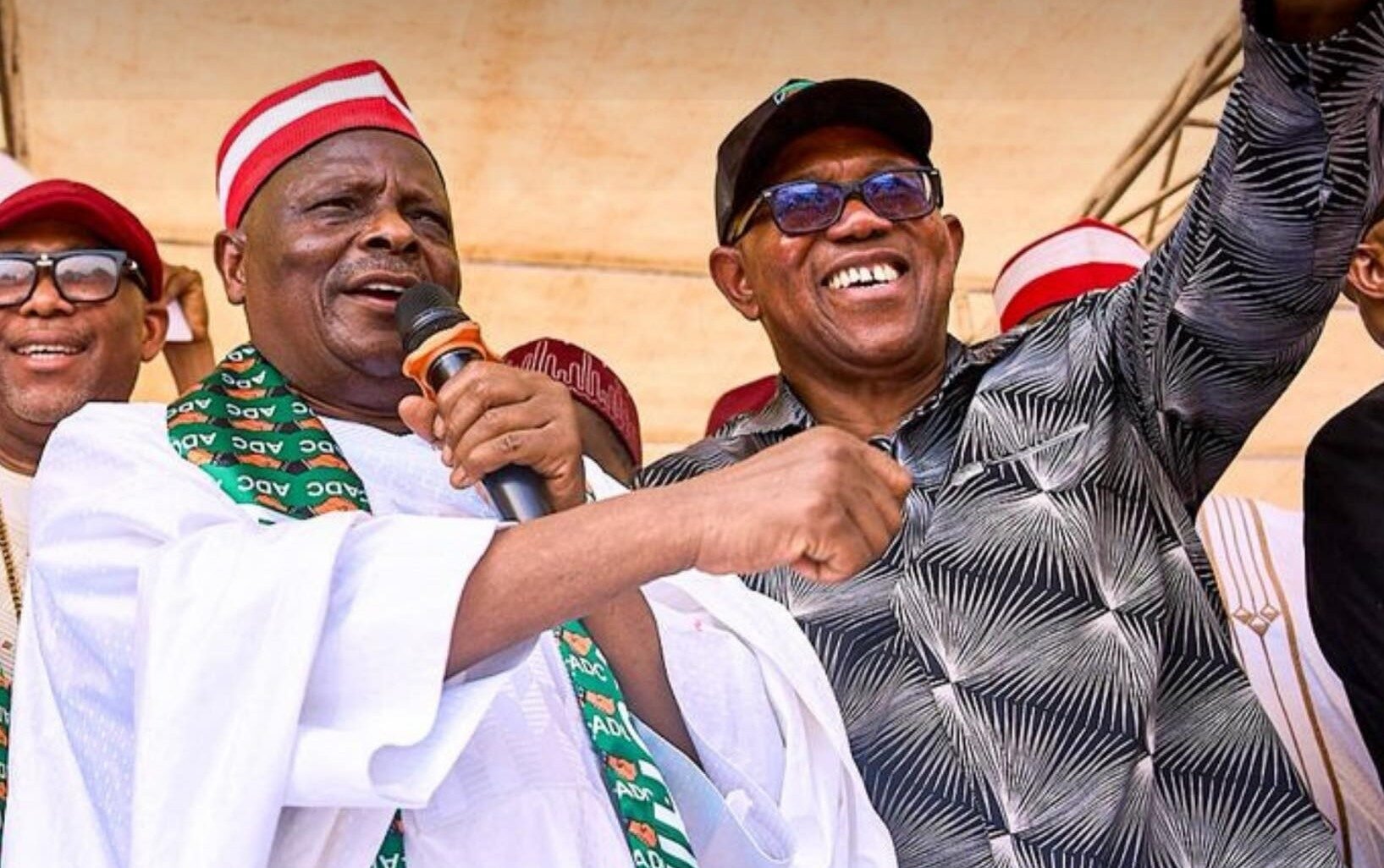
The Peter Obi-Kwankwaso joint ticket demolishes all three pillars simultaneously.
I. THE SENSITIVITY ANALYSIS: What Tinubu Fears Most
Political sensitivity analysis asks a simple question: what input causes the greatest disruption to the system’s equilibrium?
Tinubu’s equilibrium depends on predictable opposition behaviour. He can handle Labour Party alone. He can handle NNPP alone. He can handle PDP in its current decomposed state. What he cannot handle, as empirically demonstrated is an opposition force that combines:
- Mass urban youth mobilisation (Obidient Movement)
- Impenetrable regional bloc loyalty (Kwankwasiya Movement)
- Candidates he cannot arrest, cannot compromise, and cannot easily delegitimise
The sensitivity variable here is coalition cohesion under electoral pressure.
In 2023, Tinubu won partly because these two movements split the non-APC vote. The sensitivity output was catastrophic for Nigeria. Reverse that input, unite both movements under one ticket and the output reverses catastrophically for Tinubu.
II. THE KANO LESSON: The One Time Tinubu Got Badly Burnt
This is the empirical cornerstone of the entire argument and it must be stated without euphemism.
In the 2023 Kano gubernatorial election, Tinubu attempted what he routinely does everywhere else, manipulate the outcome through INEC and the judiciary.
He installed Nasiru Gawuna of the APC as the declared governor. What happened next was not politics. It was a political earthquake.
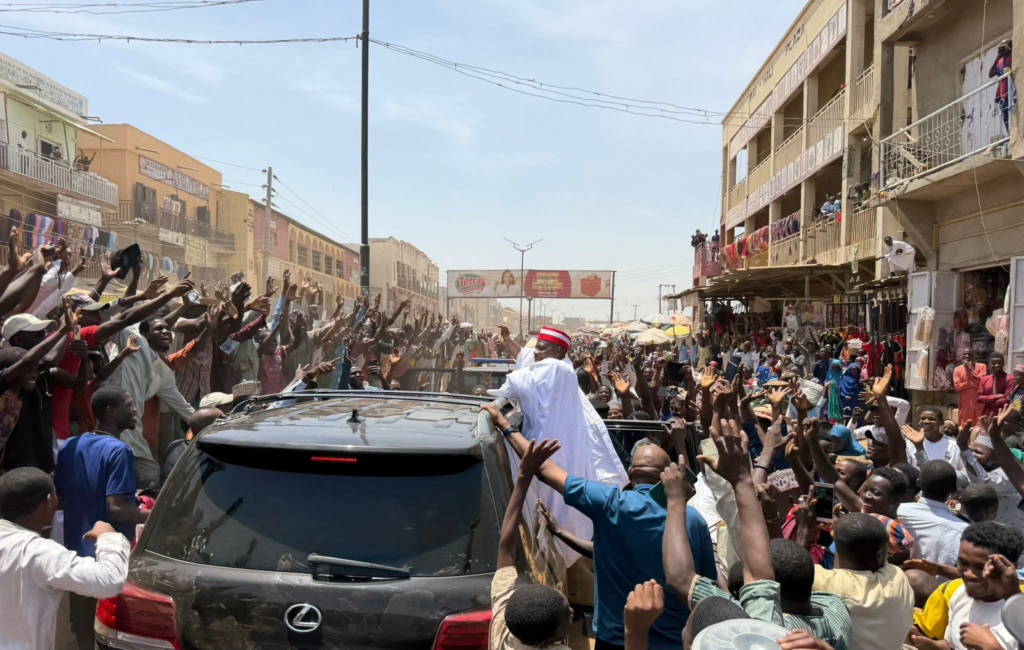
The Kwankwasiya movement did not write petitions. They did not hold press conferences. They mobilised. The streets of Kano became ungovernable. The pressure was so immense, so organic, and so impossible to suppress without a massacre that the judiciary, even Tinubu’s captured judiciary, was forced to restore Abba Kabir Yusuf of NNPP as the rightful governor.
Read that again. Tinubu’s own compromised tribunal system was forced to reverse course in Kano because the cost of sustaining the fraud against the Kwankwasiya was simply too high.
This is not conjecture. This is the historical record. It is the only documented case in recent Nigerian political history where Tinubu deployed his standard rigging architecture and was forced to retreat.
The Kwankwasiya movement is the one variable his system could not absorb.
III. WHY THIS JOINT TICKET CREATES AN UNTOUCHABLE POLITICAL FORCE
A. The Arrest Calculus: Two Men He Cannot Touch
Tinubu has systematically intimidated, harassed, detained, and neutered opposition figures across Nigeria. El-Rufai has been arrested. Nyesom Wike has been co-opted. Governors have been threatened with EFCC. This is his playbook, identify the opposition leader, find their exposure point, and apply pressure until they fold or defect.
Peter Obi and Kwankwaso represent a complete failure of this playbook for different but complementary reasons:
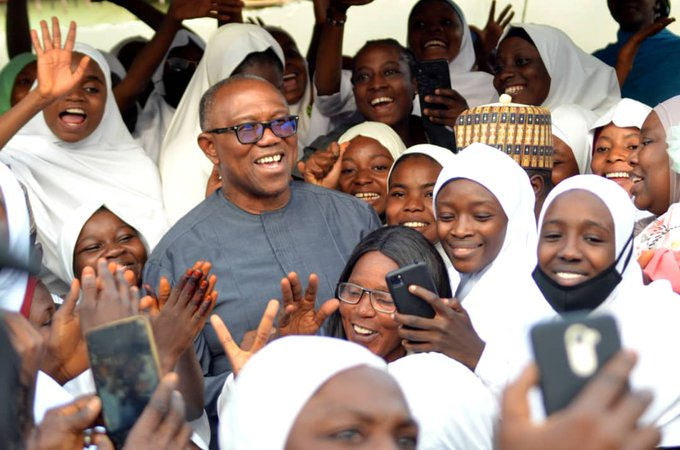
Peter Obi carries an international legitimacy profile and a youth movement so emotionally invested in his political survival that any attempt to arrest or intimidate him would ignite a generational revolt in Lagos, Abuja, Port Harcourt, and Enugu simultaneously. The Obidient Movement is not a party structure, it is a identity movement. You cannot decapitate an identity.
Rabiu Kwankwaso sits behind the shield of the Kwankwasiya; a movement so deeply embedded in Kano’s social fabric that it functions as a parallel state. Any federal intimidation of Kwankwaso in Kano would be interpreted not as a political act but as an attack on Kano itself. The North-West security implications alone would give any rational presidency pause.
Together, they create a mutually reinforcing immunity.
Touch Obi, and the South-East and urban youth explode.
Touch Kwankwaso, and the North-West becomes ungovernable.
Tinubu cannot touch both simultaneously without triggering a national crisis that even his international backers cannot ignore.
B. Geographic Complementarity: The Electoral Map Nightmare
Let us be coldly analytical about the electoral mathematics.
The Obidient Movement gives the ticket credibility in urban centres that Kwankwaso alone cannot penetrate.
The Kwankwasiya gives the ticket a Northern mass base and a proven anti-rigging street force that Peter Obi alone cannot deploy.
Tinubu’s INEC strategy depends on being able to inflate figures in compliant states while suppressing votes in opposition strongholds.
The sprawling influence of the Kwankwasiya movement in Kano spreads to neighboring states like Kaduna, Jigawa, Bauchi, Katsina, Kaduna, Zamfara, Sokoto and Plateau. These zone of influence spans across the North West, North Central and North Eastern states.
A ticket with iron-grip control over the South-East and Kwankwasiya universe creates two zones where that suppression becomes operationally difficult and politically catastrophic if attempted.
C. The Party Fragmentation Trap; Turned Against Tinubu
One of Tinubu’s most effective weapons is party destabilisation. He creates factions. He funds parallel congresses. He uses the courts to recognise his preferred faction. He did this with PDP. He is doing it with other structures.
But here is the critical strategic insight: the moment Peter Obi and Kwankwaso formally align and adopt a common platform as the flagbearers; whether ADC, LP, or any vehicle, Tinubu faces an impossible dilemma.
If he tries to create a faction within that party, he triggers a confrontation with the Kwankwasiya movement and places himself on a collision course with them along with the support of the Obidient movement and the rest of Nigerian voters.
As Kano 2023 demonstrated, that confrontation has a known outcome.
Tinubu loses and retreats.
He cannot use the party fragmentation weapon against a ticket that has Kwankwaso’s movement as its security architecture.
The party becomes, in effect, riot-proofed against Tinubu’s standard destabilisation tactics.
IV. THE MOVEMENT ARCHITECTURE: Why These Are The Only Two Organic Forces That Matter
Nigerian opposition politics is littered with manufactured movements; structures built on money, patronage, and elite calculation that dissolve under pressure. Tinubu understands this perfectly, which is why he applies financial pressure first.
The Obidient Movement and the Kwankwasiya are structurally different animals.
They are:
- Ideologically self-sustaining: their loyalty is not to a patron who can be bought out; it is to an identity, a community, a sense of political selfhood that exists independent of funding.
Proven under adversarial conditions: both movements have been tested. The Obidient Movement survived the trauma of 2023’s stolen election and remained coherent. The Kwankwasiya survived a direct rigging assault in Kano and won.
These are battle-hardened political organisms.
Every other opposition political structure in Nigeria is, at its core, a collection of individuals with price tags. These two movements are the exceptions. That is precisely what makes their combination so devastating to Tinubu’s operational model.
V. THE MORAL AND NARRATIVE DIMENSION — CONTROLLING THE STORY
Politics is not only arithmetic. It is also narrative. And the narrative of a Peter Obi-Kwankwaso joint ticket writes itself in letters that even Tinubu’s media apparatus cannot easily distort:
“The competent South-Eastern technocrat and the North-Western mass organiser, together, against the Lagos machine.”
This narrative does several things simultaneously:
It neutralises the ethnic card Tinubu would otherwise play, you cannot call a South-East/North-West alliance an Igbo agenda or a Hausa agenda
It frames APC as the regional candidate (Lagos-Abuja axis) and the joint ticket as the truly national candidate.
It speaks to Nigeria’s deepest political wound, the sense that the country is governed by a Lagos-centred elite at the expense of everyone else
The moral clarity of two men who cannot be easily painted as corrupt, compromised, or power hungry for its own sake, against a president whose asset declaration has become a national joke is a narrative weapon of extraordinary power.
VI. THE STRATEGIC RECOMMENDATION: A MESSAGE TO THE OPPOSITION
The Nigerian opposition’s greatest sin in 2023 was not losing. It was refusing to understand why they lost.
They lost because Tinubu correctly calculated that a fragmented opposition was a defeatable opposition, regardless of the actual vote count.
The single most important decision for all the Nigerian opposition parties to make before 2027 is this: collectively consolidate all your various party structures behind this two organic movements under one ticket, on one platform, with one message.
Every other opposition calculation; who gets vice president, which party platform, which region leads; is secondary noise.
The primary question is whether the Nigerian opposition has the strategic discipline and patriotic clarity to set aside individual ambition for the coalition that actually threatens Tinubu’s grip.
Peter Obi brings competence, integrity, and the urban youth.
Kwankwaso brings the North, the street force, and the proven capacity to make rigging operationally costly.
Together, they are the only combination that makes Tinubu’s 2027 playbook fail before it even begins.
Conclusion: The Architecture of Fear
Tinubu does not fear moral arguments. He does not fear press releases. He does not fear petitions to the African Union or statements from civil society.
Tinubu fears consequences he cannot control.
The Kano gubernatorial election taught us exactly what that looks like in practice, a movement so deeply rooted, so structurally resistant to his standard tools, that even his captured institutions had to stand down.
Scale that dynamic to the national level. Combine it with the moral legitimacy and pan-Nigerian youth energy of the Obidient Movement.
Place both behind one ticket. And watch a man who has never once in his political career faced a force he could not buy, intimidate, or fracture finally face something he does not know how to answer.
That is not just opposition politics. That is the architecture of fear.
And Nigeria deserves to build it.