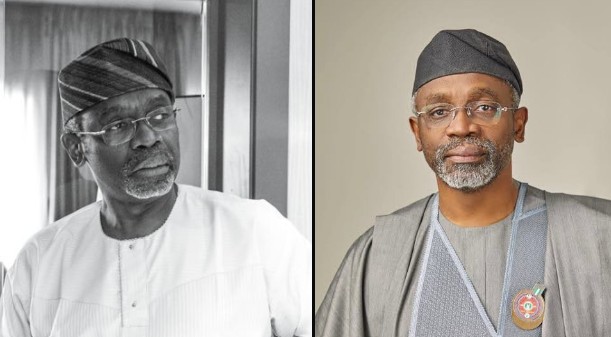
There are documents that embarrass a government, and there are documents that indict one. The memo signed by Femi Gbajabiamila on July 4, 2023, and published this week by Peoples Gazette, belongs to the second category. Five weeks into an administration that asked starving Nigerians to endure the harshest economic medicine in a generation, the president’s chief of staff put his signature to a directive claiming 1.5 per cent of the Nigeria Upstream Petroleum Regulatory Commission’s cost of collection, a sum the Gazette calculates at 54 billion naira, for a purpose so vague it barely qualifies as a sentence: the upgrading of crude oil and gas metering and transparency systems. Fifty-four billion naira. For transparency systems. Authorised by a provision of law that, when you actually read it, authorises nothing of the sort.
This is not a close call requiring learned disputation. Mr Gbajabiamila’s memo cited Section 24(2)(c) of the Petroleum Industry Act as the statutory authority for the claim, asserting that the authority to collect these fees is vested in statute but that the specific percentage collectable is subject to presidential approval. The Gazette checked. The provision reads, in its entirety, that the source of the commission’s fund shall include the cost of collection by the commission. That is all. It confers no percentage, no presidential discretion, no ring-fencing power, no role whatsoever for the chief of staff of the president. Worse still for the memo’s authors, the very next-door provision, Section 24(1), assigns control of the commission’s expenditure to the National Assembly through appropriation. The law Mr Gbajabiamila invoked does not merely fail to support his directive. It forbids it. A first-year law student would blush at the citation. The chief of staff to the President of the Federal Republic signed it, and 54 billion naira in oil revenue moved on the strength of it.
Anatomy of a Heist by Stationery
Strip away the officialese and consider what the reporting actually describes. According to sources who spoke to the Gazette, within weeks of the inauguration Mr Gbajabiamila began what the paper calls a financial push, knocking on the doors of Nigeria’s richest revenue agencies: the Nigeria Revenue Service, the maritime agency NIMASA, the Customs Service, and finally the NUPRC, the regulator sitting atop the country’s oil wealth. The NUPRC’s cost of collection had swollen from 98 billion naira in 2022 to 145 billion naira after the president’s currency reforms. The memo carved that pool in two: 2.5 per cent for the commission’s actual operations, and 1.5 per cent ring-fenced under presidential directive for the metering and transparency line whose meaning nobody has yet managed to explain. What are transparency systems that cost 54 billion naira? The Gazette asked. The presidency did not say. Nobody has said. In a country that cannot fund its primary health centres, a number with ten zeros was set aside behind a phrase with no content, on the authority of a statute that says the opposite of what the memo claims.
If a market trader in Onitsha presented a forged receipt to claim goods from a warehouse, Nigerian police would call it obtaining by false pretences and she would sleep in a cell. When the presidency is confronted with evidence that its second most powerful official cited a non-existent legal power to redirect billions in public revenue, the presidential spokesman, Bayo Onanuga, offers this: Gbajabiamila did not commandeer any money, and the directive was within the right of the president as commander-in-chief. There was, he added, no smoking gun. One struggles to imagine what Mr Onanuga believes a smoking gun looks like, if not a signed memo, on presidential letterhead, misquoting a statute to move 54 billion naira. The defence is not a denial. It is a confession with a shrug: yes, the money moved, and the president wanted it moved, and what exactly do you propose to do about it?
The Man Holding the Pen
Character is not incidental to this story; it is the story. The official who signed the memo is not a hapless functionary who misread a statute in good faith. Femi Gbajabiamila’s documented history with other people’s money spans two continents. In the United States, the State Bar of Georgia suspended him for five years in 2015 and terminated his law licence outright in 2020, after he was accused of stealing a client’s money and then, for months, simply ignoring the Bar’s summonses to answer for it, as the Gazette has reported. Reflect on that for a moment. The man vetting every appointment, every memo and every minister in Nigeria’s presidency is a man an American professional body concluded it could no longer, in its own words, condone.
The pattern did not stop at the water’s edge. In 2022, as Speaker of the House of Representatives, Mr Gbajabiamila was accused in reporting by the same newspaper of accepting two million dollars in cash bribes to shepherd the Petroleum Industry Bill through the House over the anguished protests of the host communities whose land produces the oil. And today, as chief of staff, he stands accused by Adeniyi Adeyemi, the self-described director-general of the Presidential Foreign Intervention Promotion Council, of collecting 400 million naira through a proxy, demanding 200 million more, and seeking 48 per cent of a 27.7 billion naira take-off grant for an agency the presidency swears does not exist, yet which somehow surfaced in the 2026 Appropriation Act. Mr Gbajabiamila denies all of it and is suing. He is entitled to his day in court. But a reasonable public is equally entitled to observe that the allegations now trailing him form a straight, unbroken line from an Atlanta law office to the anteroom of the Nigerian presidency, and that every single one involves the same thing: other people’s money, taken through paperwork.
Notice, too, what the alleged targets have in common. The PIB affair concerned oil money owed to host communities. The NUPRC memo concerns oil money belonging to the federation. The commission’s fund exists to regulate the industry on which every naira of Nigeria’s budget ultimately leans. When the reporting is read together, what emerges is not a scandal but a business model: identify the deepest pool of public money, manufacture a paper justification, invoke the president’s name, and dare anyone to object.
The President Is Not the Bystander. He Is the Principal
And here the trail runs, unavoidably, to Bola Tinubu’s desk. The memo itself records that Mr President has directed the Budget Office and the Accountant-General to implement the arrangement. The presidency’s defence is not that the president was deceived; it is that the president commanded it. So Nigerians face a closed loop of culpability with no exit. Either the president knowingly ordered the diversion of 54 billion naira on the authority of a law that does not say what his chief of staff claimed, or the president signs whatever Mr Gbajabiamila puts in front of him, in which case the Federal Republic of Nigeria is being run by a man disbarred in Georgia for taking a client’s money. There is no third reading. Incompetence or complicity: pick one, and then explain why either is compatible with remaining president.
Everything else about this administration’s conduct confirms which reading the men at the top prefer. No investigation of the memo has been announced. No suspension. Not one word from the president himself. The instinct, as always, has been to attack the messenger; Mr Gbajabiamila’s response to the PFIPC allegations was a threatened 10 billion naira defamation suit, and this government’s officials have made lawsuits against journalists their reflexive answer to disclosure. Meanwhile the wreckage of previous scandals lies exactly where it fell: the Betta Edu report, never published after more than two years; the 44 billion naira NSIPA affair, never accounted for; the crude oil theft allegations Atiku Abubakar’s office listed among a troubling sequence of controversies, never resolved; and, as of this weekend, the unexplained death of a young physiotherapist, Mary Habila, in the residence of the works minister, met from Aso Rock with the silence of the grave. This is not a government that has failed at accountability. It is a government that has abolished it.
Nor can the president plausibly present himself as the honest man betrayed by his court. This is a leader whom the Organized Crime and Corruption Reporting Project named a finalist for its 2024 Corrupt Person of the Year, a leader who in 1993 forfeited 460,000 dollars to the United States in proceedings connected to a heroin trafficking investigation, and whose administration, OCCRP reports, benefits from Washington’s continued refusal to release the underlying records. A president with that biography had one path to legitimacy: to run the cleanest government in Nigerian history. He has instead assembled around himself men whose files read like his own, and defended them with the full rhetorical weight of his office.
Resign, or at Least Release the Country
The constitutional arithmetic is short. Section 15(5) of the Constitution commands the state to abolish corrupt practices and abuse of power. Section 24(1) of the Petroleum Industry Act places the commission’s expenditure under the National Assembly’s appropriation power. The president swore to preserve, protect and defend the Constitution, and his office now asserts, in writing, through his spokesman, a presidential right to override statute by directive. That assertion alone, independent of any naira figure, is a repudiation of the oath. A president who claims the power to move public revenue on his own say-so, and whose defence to a false legal citation is that he is commander-in-chief, has ceased to occupy a constitutional office and begun to occupy a throne.
That is why the remedy cannot be another committee. Bola Tinubu should resign. Resignation is not an admission of criminal guilt; it is the recognition that the presidency itself has become the obstruction, that no investigation of the chief of staff can be credible while his principal controls the investigators, and that a nation’s institutions matter more than one man’s ambition. If resignation is beyond him, then the minimum decency he owes Nigeria is a public declaration that he will not seek re-election in 2027. He cannot campaign on a budget that funded a phantom agency, on statutes his own office misquotes, on investigations whose reports Nigerians are never shown. Democracies elsewhere shed leaders over fractions of these sums; a former South Korean president was jailed this very week over funding violations that would not amount to a rounding error in the NUPRC memo. Nigerians, who buried their subsidies and their savings on this president’s promise of shared sacrifice, are owed no less an act of consequence.
Let the record note the other side, briefly, because brutality without fairness is mere noise. The presidency insists the directive was lawful and that no money was commandeered. Mr Gbajabiamila denies every allegation, from Atlanta to Abuja, and has initiated legal action. The Gazette itself concedes that whether the president’s action constitutes constitutional overreach can only be determined by a competent court, and no court has yet ruled. The administration points to prosecutions of Godwin Emefiele, Yahaya Bello and others as proof of will. All noted. None of it explains the false citation. None of it explains the 54 billion naira. None of it explains why the man who signed the memo still holds the second most powerful office in the land, and none of it will survive contact with the only question that matters: if this were innocent, why has no one ever explained it?
Mary Habila’s family is owed the truth. The National Assembly is owed its appropriation power. The host communities are owed their share, and two hundred million Nigerians are owed a government that does not treat the treasury as a private estate with a public address. Bola Tinubu can give the country none of these things, because his government is the reason they are missing. He should go. If he will not go now, he must at least promise not to ask Nigerians, in 2027, to ratify what the memo of July 4, 2023 revealed him to be.